Guides
What Makes a Hoodie High Quality? Fabric, Weight, Fleece, and Construction
Sep 4, 2026 · 5 min read · Written by Otaku Bestie
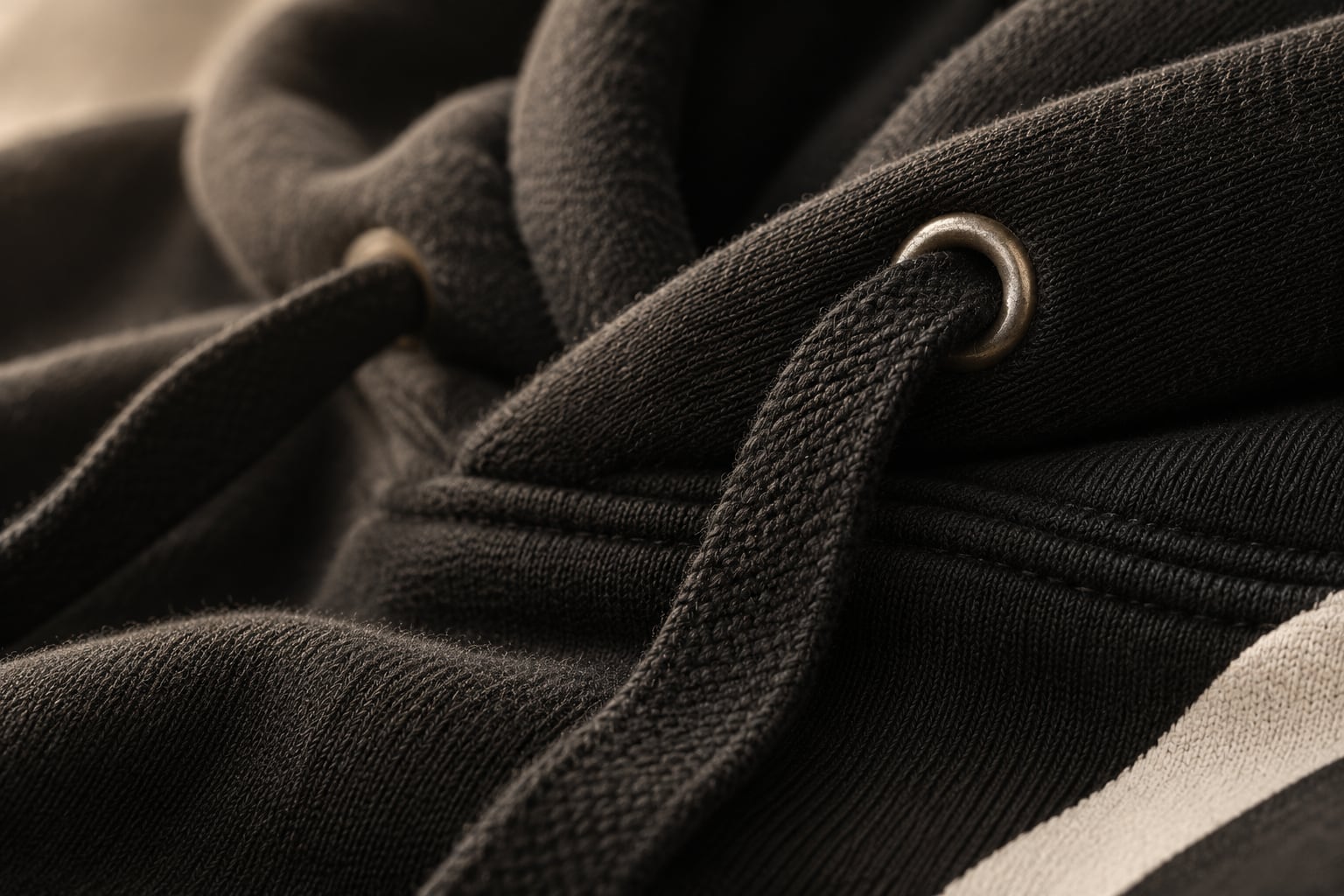
Quick answer: A high-quality hoodie uses fabric and construction suited to its purpose. Check fiber content, fabric weight, interior structure, seam consistency, ribbing recovery, hood shape, pocket attachment, and print or embroidery execution. A heavier hoodie may feel more substantial, but GSM or ounces alone do not prove comfort, durability, or craftsmanship.
The first hoodie you reach for on a cold morning and the hoodie you carry into a crowded convention may need completely different qualities. One should hold warmth and structure. The other may need to layer easily, breathe indoors, and fit into a bag after lunch.
That is why “premium” cannot be reduced to the thickest fabric or the highest price. Quality means the garment performs the job promised on its product page.
Does fabric weight determine hoodie quality?
Fabric weight describes how much a given area of material weighs. It is commonly listed as grams per square meter, or GSM, and ounces per square yard. Higher numbers generally indicate more material and often create greater warmth and structure. They do not automatically mean softer yarn, better seams, a more comfortable fit, or cleaner decoration.
| General range | Likely feel | Good use |
|---|---|---|
| Lightweight, roughly 200–250 GSM | Easy to pack and layer | Warm climates, indoor wear, transitional seasons |
| Midweight, roughly 250–300 GSM | Balanced warmth and structure | Everyday hoodies and year-round layering |
| Heavyweight, above roughly 300 GSM | Substantial, structured, and warmer | Cold weather and oversized streetwear silhouettes |
These are useful orientation points rather than universal grades. Printful's current hoodie design guide uses similar seasonal ranges while emphasizing that the intended customer and climate should drive the choice.
Is cotton or polyester better for a hoodie?
Cotton usually contributes a familiar, breathable feel and a surface that works well with many printed designs. Polyester can improve shape retention, drying speed, wrinkle resistance, and durability. A cotton-polyester blend aims to balance those traits.
Neither fiber guarantees quality. A carefully knitted blend can outperform a loosely constructed all-cotton hoodie for repeated everyday wear. Read the actual percentages rather than treating “blend” as a complete description. The FTC explains that most textile apparel labels must identify fiber content and origin, giving shoppers useful facts for comparison.
What is the difference between fleece and French terry?
Fleece refers to a knit fabric with an interior that is commonly brushed into a soft, fuzzy surface. It traps warmth and creates the cozy feel many people associate with a winter hoodie. French terry keeps visible loops on the inside instead of brushing them into a plush nap. It is usually less insulating and works well for lighter layering.
| Interior | Feel | Best match |
|---|---|---|
| Brushed fleece | Plush and warm | Cold weather, lounging, outdoor queues |
| French terry | Looped, lighter, less fuzzy | Indoor wear, transitional weather, layering |
| Jersey or light knit | Thin and flexible | Coverage without much insulation |
Printful's hoodie-material guide offers a broader comparison of these structures and common fiber blends.
Which construction details signal a better hoodie?
- Even seams: Stitching should remain consistent without skipped sections, loose threads, or puckering.
- Reinforced stress points: Pocket corners, zipper ends, and drawstring openings take repeated force.
- Ribbing with recovery: Cuffs and hem should stretch comfortably and return toward their original shape.
- A stable hood: A double-layer or paneled hood can hold shape better, although a lighter single layer may suit warm-weather use.
- A secure pocket: Kangaroo-pocket edges should sit flat and feel firmly attached.
- A usable zipper: On zip hoodies, the slider should move cleanly and the surrounding fabric should not ripple excessively.
How do print and embroidery affect hoodie quality?
The decoration must suit the fabric. Detailed printed artwork benefits from a smooth, stable surface. Embroidery needs enough structure to hold stitches without pulling or rippling. A large, dense embroidered area may feel stiff, while an oversized printed area can change breathability and hand feel.
Use our printed versus embroidered apparel guide when choosing between those looks. For existing printed pieces, follow the hoodie care guide.
Is a heavyweight hoodie always warmer?
Greater fabric weight often adds warmth, but interior structure, fiber, air movement, fit, and layering also matter. A roomy heavyweight hoodie can allow more airflow than a closer-fitting fleece layer. Wind and moisture can change the experience again.
For a convention, ask whether you will wait outdoors, spend hours in a crowded hall, or wear the hoodie over another outfit. Our hoodie-versus-sweatshirt comparison applies those tradeoffs to event days.
Hoodie quality FAQ
What GSM is good for a hoodie?
About 250–300 GSM is a versatile midweight range, while weights above roughly 300 GSM generally feel heavier and warmer. Climate, construction, and intended fit matter more than choosing the largest number.
Is 100% cotton always the highest quality?
No. Cotton can feel soft and breathable, while polyester can improve shape retention and drying. A well-made blend may be the better everyday hoodie.
How can I check hoodie quality online?
Read the fiber percentages, fabric weight when provided, finished measurements, interior description, care instructions, decoration method, return policy, and detailed product reviews.
What makes a hoodie feel premium?
A substantial and consistent fabric, comfortable interior, balanced fit, resilient ribbing, stable hood, clean seams, and well-executed decoration together create a premium feel.
Explore the Otaku Bestie hoodie collection and compare each product's specifications with the qualities that matter for your climate and routine.