Guides
How to Judge the Quality of an Anime Graphic T-Shirt
Sep 7, 2026 · 6 min read · Written by Otaku Bestie
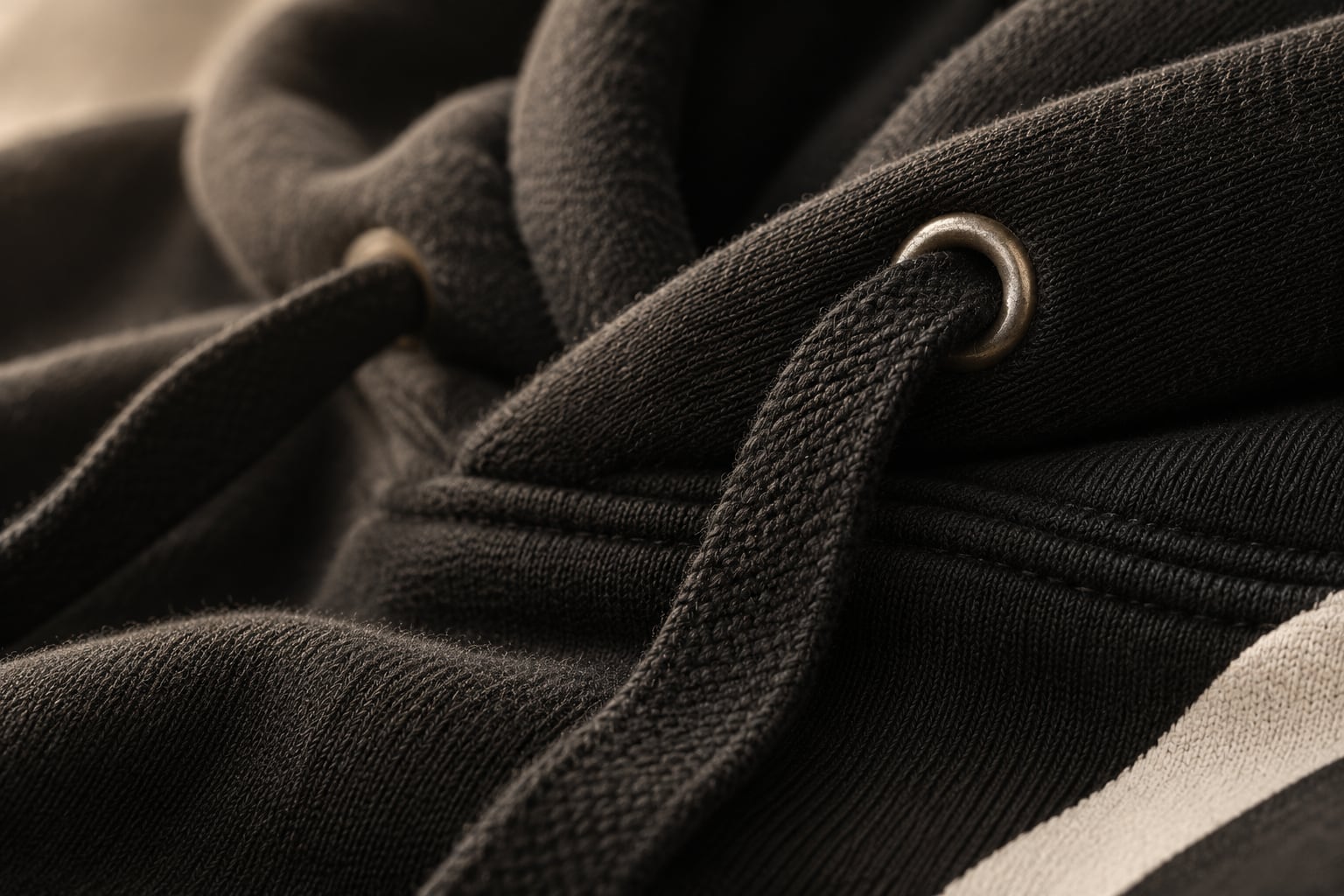
Quick answer: Judge an anime graphic T-shirt by the whole product: fiber content, fabric weight, collar and seam construction, print sharpness, size-chart detail, care instructions, and seller transparency. A dramatic design or high price does not prove quality. The listing should give you enough specific information to predict how the shirt will fit, feel, wash, and arrive.
The artwork gets the first look. Quality decides whether the shirt becomes part of your weekly rotation or slowly disappears behind everything else in the drawer.
Shopping online makes that judgment harder because you cannot touch the fabric or inspect a seam. The solution is not to trust one buzzword. It is to collect several small signals from the garment specification, product images, sizing information, and the store itself.
What makes an anime T-shirt high quality?
A high-quality shirt is suitable for its intended use and described honestly. A lightweight tee can be excellent for warm weather, while a heavier shirt may create the structured drape associated with streetwear. Neither is automatically superior. Quality means the fabric, construction, decoration, fit, and care expectations work together.
| Area | Useful information | Warning sign |
|---|---|---|
| Fabric | Fiber content and garment weight or feel | Only vague claims such as “premium” |
| Construction | Collar, seams, pre-shrinking, and fit description | No garment details at all |
| Clear close views, placement, and care guidance | Artwork floating over a generic mockup with inconsistent scale | |
| Sizing | Finished measurements and measuring instructions | A size label with no chart |
| Seller | Contact route, production timeline, and policies | Hidden identity or copied policy text |
Does heavier fabric mean a better T-shirt?
Fabric weight changes drape, warmth, opacity, and structure. Heavier fabric often feels more substantial and can hold a boxier silhouette. Lighter fabric can feel cooler, softer, and easier to layer. Compare the stated weight with the style you want instead of treating the largest number as the only quality score.
Fiber content matters too. Cotton-rich shirts often feel familiar and breathable, while blends can change softness, stretch, moisture behavior, and shrinkage. The Federal Trade Commission explains that most textile products sold in the United States must identify fiber content, country of origin, and the responsible business. See the FTC’s apparel-labeling overview.
What should you inspect in the collar and seams?
The collar influences how long a tee looks composed. Look for an even ribbed neck, clean attachment, and a shape appropriate to the intended fit. Seams should appear straight and balanced without obvious twisting or puckering in the product photography.
Side-seamed shirts and tubular shirts are built differently; either can be serviceable when executed well. More important questions are whether the body hangs straight, the sleeves match, and the construction details are disclosed accurately.
How can you evaluate a graphic print online?
Look at edge clarity, small details, tonal transitions, print placement, and consistency across color options. A realistic listing should show how the artwork sits relative to the collar, side seams, and hem. If every color uses exactly the same floating artwork shape without responding to the garment, treat the image as a placement guide rather than proof of the finished surface.
Different decoration methods produce different textures and aging patterns. A soft print is not automatically weak, and a thick print is not automatically durable. The seller should provide care guidance suitable for the finished garment. Our graphic tee care guide explains how washing choices affect printed surfaces.
Why is the size chart part of product quality?
Because a well-made shirt in the wrong dimensions still fails the customer. Useful listings provide finished-garment measurements and explain where those measurements are taken. Compare width and length with a shirt you already wear rather than relying on S, M, or L alone. Follow our anime T-shirt sizing guide for the complete method.
Are product mockups a warning sign?
Not by themselves. Made-to-order businesses commonly use mockups to show combinations of artwork, garment colors, and sizes without producing every variant for photography. The stronger question is whether the store labels the product clearly and supports the mockups with specific garment details, consistent placement, customer service, and honest fulfillment expectations.
Watch for impossible shadows, inconsistent artwork scale, mismatched garment shapes, or the same customer image appearing on unrelated stores. Reverse-image searching suspicious photography and placing a smaller first order can reduce risk. Our guide to checking an anime clothing store covers the seller-level review.
Does price prove anime apparel quality?
No. Price reflects many inputs, including garment cost, production scale, licensing, artwork, marketing, shipping strategy, and margin. A high price can accompany excellent construction or weak information. A lower price can represent efficiency or a shortcut. Use evidence from the listing and policies rather than price alone.
A seven-point anime T-shirt quality checklist
- Confirm the fiber content and intended feel.
- Check whether the fabric weight suits the climate and silhouette you want.
- Inspect collar, sleeve, and seam alignment in the available images.
- Look closely at print edges, detail, scale, and placement.
- Compare finished measurements with a shirt you own.
- Read the care label guidance, production timeline, and return policy.
- Verify that the seller provides a real contact route and describes official or independent status honestly.
Anime graphic T-shirt quality FAQ
Is 100% cotton always best?
No. Cotton is familiar and comfortable, but blends can offer different softness, stretch, and performance. Choose according to fit and use.
Are heavyweight anime tees higher quality?
Not automatically. Heavyweight fabric offers more structure, while lighter fabric can be better for heat and layering. Construction and print execution still matter.
Can a mockup accurately show the final product?
A mockup can communicate color and placement, but it may not capture exact texture, drape, scale, or print appearance. Use it alongside specifications and policies.
What is the fastest quality check before buying?
Find the fiber content, finished measurements, care instructions, production explanation, and return policy. Missing all five is a reason to slow down.
Use the checklist while browsing Otaku Bestie’s anime and K-pop graphic T-shirts, or start with the curated Otaku Favorites.